Blog / 2025 Chevy Suburban Brookly, CT

Redefine Spacious Travel: the 2025 Suburban

2025 Chevy Suburban | Brooklyn, CT
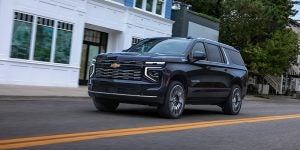
From early morning drop-offs to weekend road trips, the 2025 Chevy Suburban makes it all feel easier and more enjoyable. With versatile space, confident towing, and advanced connectivity, this full-size SUV helps families stay comfortable, connected, and in control.

The 2025 Chevy Suburban: Full-Size Space, Full-Strength Performance

Versatile Space

The Suburban's three-row layout easily accommodates eight, and it can carry up to nine if you opt for the available front bench seat. With 36.7 inches of legroom, even the third row is roomy enough for most adults to stretch out. The dedicated cargo area has a generous 41.5 cubic feet of space, so it can easily hold your groceries, luggage, and sports equipment. If you need even more room or are carrying longer items, you can fold down some or all of the rear seats to access up to 144.5 cubic feet of space. A standard cargo management system, available power-folding third row, and available AutoSense power liftgate make loading your gear easier than ever.

Comfortable Interior

The Suburban's interior is luxurious enough to make even the longest trip feel comfortable. Tri-zone automatic climate control allows different areas of the vehicle to set their temperatures, and remote start lets you get your vehicle heated or cooled before the journey begins. Power-adjustable front seats, keyless open, and push-button start enhance the convenience, and the 11-inch color driver information center keeps important vehicle data in view. Higher trims offer additional comfort features such as heated front seats and a heated steering wheel. For the utmost in luxury, upgrade to the High Country trim.

Capable Performance

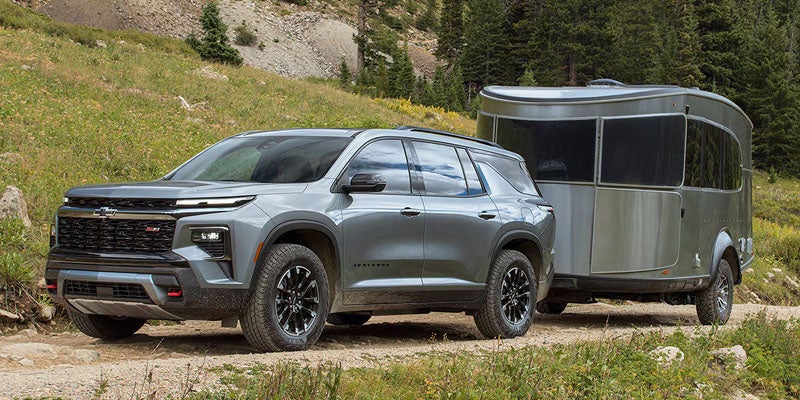
Whether your travels take you to the mountains, the campsite, or across the country, the Suburban can handle it. It comes standard with a 5.3L EcoTec3 V8 that produces 355 horsepower and 383 lb-ft of torque. Rear-wheel drive comes standard, and the standard traction select system allows you to easily adjust vehicle performance to adapt to road conditions and weather. Hill start assist and the available hill descent control help make driving on an incline safer. Standard trailering features like trailer sway control, hitch guidance, and trailering equipment help make towing stress-free. If you need more advanced towing capabilities, opt for the Max Trailering Package, which gives you a towing capacity of 8,400 pounds.

Advanced Tech and Safety

Whether you're heading across town or on a road trip, staying connected is easy thanks to the Suburban's advanced infotainment system. It features a 17.7-inch touchscreen with Google built-in, natural voice recognition, and wireless smartphone integration. A six-speaker audio system and Bluetooth audio streaming help keep you entertained, and standard Wi-Fi hotspot capability keeps you online. The Suburban is equipped with several advanced driver-assistance features, including blind zone steering assist, forward collision alert, enhanced automatic parking assist, and automatic high beams. Visit Vachon Chevrolet in Brooklyn, CT to find the Suburban that's right for your family.

Posted in:

Related Posts

2026 Chevrolet Trax

The 2026 Chevrolet Trax Makes a Strong Case for Keeping Things Simple

The 2026 Chevrolet Trax takes a disciplined approach to a compact SUV. It has 5 seats, FWD, one small T urbocharged engine, useful cargo capacity, and enough technology to feel contemporary without pretending to be something it isn't. For drivers around Brooklyn, Connecticut, that simplicity may be the Trax's most appealing feature. This is a compact SUV built around the things people use regularly, with 5 trims providing different ways to dress up the same sensible foundation. Five Trims Without Five Different Identities The 2026 Trax lineup consists of LS, 1RS, LT, 2RS, and ACTIV. LS establishes the fundamentals with LED headlights, wireless Apple CarPlay® and Android Auto™ compatibility, and Chevy Safety Assist. The RS models change the visual character with RS badging, black bowtie emblems, and red interior accents, while 2RS adds a flat-bottom steering wheel. ACTIV takes another route with black-painted aluminum wheels, Titanium chrome accents, and distinctive yellow interior details. There's also an available Midnight Edition for LT, combining High Gloss Black mirror caps, grille bar, roof rails, and wheels with black badging, bowties, wheel caps, and front and rear bumper skid plates. Pick the appearance and equipment you like without having to rethink the entire vehicle. Safety Equipment Starts Where the Range Does Every 2026 Trax includes Chevy Safety Assist, a collection of 6 technologies: Automatic Emergency Braking, Front Pedestrian Braking, Lane Keep Assist with Lane Departure Warning, Forward Collision Alert, IntelliBeam ® High Beam Assist, and Following Distance Indicator. A Rear Vision Camera and Teen Driver Technology also come standard. Depending on configuration, buyers can also add Rear Park Assist, Rear Cross Traffic Alert, Lane Change Alert with Side Blind Zone Alert, and Adaptive Cruise Control. Technology in the 2026 Chevrolet Trax Wireless Apple CarPlay® and Android Auto™ compatibility are standard. An available 11-inch diagonal color touchscreen gives the Trax a larger central interface, while available wireless charging removes another cable from the cabin. An available Wi-Fi® hotspot can keep compatible devices connected on longer journeys. It's a good example of where the Trax spends its complexity. Not on elaborate mechanical systems most owners rarely exploit, but on technology they'll interact with repeatedly. Performance on the Road Every 2026 Trax uses an ECOTEC® 1.2L Turbo 3-cylinder producing 137 hp and 162 lbs. ft. of torque. The Trax is FWD only, and it isn't rated for towing. Buyers needing either capability should look elsewhere in Chevrolet's SUV inventory. For everyone else, the simplicity has advantages. The Trax achieves an EPA-estimated 30 mpg combined and runs on regular unleaded gasoline with a minimum 87-octane rating. It's also E85 compatible. A Compact SUV with a Spacious Interior The Trax accommodates 5 passengers and offers up to 54 cu. ft. of maximum cargo space with its rear seats folded. A 60/40 split-folding rear seat means you don't have to choose entirely between people and luggage. Drop only part of the seat and there's still room for a rear passenger alongside longer cargo. Compact SUVs earn their place by being easy to maneuvern and surprisingly useful when somebody buys a piece of furniture they didn't measure first. The 2026 Trax has also earned recognition as a Consumer Reports Recommended SUV for 2026, adding another point shoppers may want to consider during their model research. See the 2026 Chevrolet Trax at Vachon Chevrolet Vachon Chevrolet in Brooklyn can help Connecticut shoppers compare the current Trax inventory and differences among LS, 1RS, LT, 2RS, and ACTIV. Once you've found the equipment level that makes sense, schedule your 2026 Chevrolet Trax test drive online.

brake rotors on a car

Why Regular Chevrolet Brake Service: Why It Matters for Your Vehicle

Brakes have a fairly simple job, but t here's a lot of engineering involved in making it happen. Regular Chevrolet brake service helps keep those components doing their jobs properly. From a Silverado hauling equipment to an Equinox handling the family commute, every Chevy eventually needs brake maintenance. Knowing what to watch for can help Brooklyn, Connecticut drivers address normal wear before it becomes a larger repair. Why Bother Servicing Brakes Before There's a Problem? Brakes don't usually wear out all at once. Brake pads gradually lose material through normal use, fluid ages, and rotors can develop wear over thousands of miles. The process can be slow enough to adapt to those changes without noticing. A brake inspection gives technicians an opportunity to examine components such as the pads, rotors, calipers, lines, and fluid before you're relying on a dashboard warning or an unpleasant grinding sound to tell you something needs attention. Keeping up with Chevrolet maintenance can also help prevent worn components from damaging other parts of the braking system. Replacing brake pads at the appropriate time is considerably simpler than replacing pads and damaged rotors later. How Often Should the Brakes Be Checked? There isn't a universal mileage interval for every vehicle and driver. Someone spending most of the week cruising steadily on the highway won't necessarily wear brakes at the same rate as a driver navigating constant stop-and-go traffic. Driving conditions also affect brakes. Frequent short trips, heavy loads, towing, and regular travel through hilly areas can increase demands on the braking system. Your Chevrolet owner's manual is the right source for model-specific maintenance guidanc e. Our Chevrolet service technicians can also inspect your current brake condition and recommend future service based on the vehicle, mileage, and how you use it. What Do Bad Brakes Sound Like? Squealing or grinding while braking deserves attention. Other warning signs can include a brake pedal that feels unusually soft or spongy, vibration through the pedal or steering wheel, pulling while braking, or stopping distances that seem longer than they used to. A brake warning light is another signal not to postpone an inspection. Our Chevrolet service department can inspect the system and identify what's causing the change instead of relying on guesswork. Give Your Chevy's Brakes the Attention They Earn Your Chevrolet can have an impressive engine, comfortable cabin, and plenty of technology, but the ability to stop predictably remains one of its most important functions. If your brakes are making noise, the pedal feels different, or you simply can't remember the last time they were inspected, visit the service team at Vachon Chevrolet in Brooklyn, CT. Explore our Chevrolet service options and current service specials, then schedule your brake service online at a time that works for you. Your brakes do a hard job every day. It's worth making sure they're ready for the next stop.

Tire Service

Tire FAQs: What Every Driver Should Know

Tires are the biggest connection point between you, your vehicle, and the road—yet they’re often overlooked until something goes wrong. This tire FAQ is here to help you feel confident about the basics—from checking your tread depth to understanding what those numbers on your sidewall actually mean. Whether you drive a Chevy Trax, a Silverado, or anything in between, this guide has you covered. For drivers throughout Brooklyn, Connecticut and beyond, being prepared can make all the difference. What Do the Numbers on My Tires Mean? One of the most common questions in any tire FAQ is how to read tire size. That string of numbers and letters on the sidewall tells you a lot about your tire. For example, a tire marked 225/65R17 breaks down like this: 225 is the width in millimeters, 65 is the aspect ratio (the height of the sidewall as a percentage of the width), R stands for radial construction, and 17 is the wheel diameter in inches. Knowing how to read tire size can help you shop for replacements with confidence and verify that a new tire matches your vehicle's requirements. more How Do I Know When to Replace My Tires? Tread depth is the clearest indicator of tire health. New tires typically come with about 10/32 of an inch of tread. Once tread wears down to 2/32 of an inch, replacement is necessary. A quick way to check is the penny test—insert a penny into a tread groove with Lincoln's head facing down. If you can see the top of his head, it's time for new tires. Also look for cracking along the sidewalls, bulges, or uneven wear patterns, as these can all signal that a tire needs attention sooner rather than later. How Often Should I Check Tire Pressure? You should check tire pressure at least once a month and before any long road trip. Temperature changes affect pressure—tires can lose about one pound per square inch for every 10-degree drop in outside temperature. That means drivers in Brooklyn, CT who experience cold New England winters need to check pressure more frequently as the seasons change. Your vehicle's recommended tire pressure is listed on a sticker inside the driver's door jamb, not on the tire itself. That sidewall number reflects the maximum pressure the tire can handle, which is different from the ideal operating pressure for your specific vehicle. What Is Tire Rotation and Why Does It Matter? Tire rotation means moving tires from one position on the vehicle to another to promote even wear. Front tires tend to wear faster than rear tires, especially on front-wheel-drive vehicles, because they handle both steering and much of the braking load. Most manufacturers recommend rotating tires every 5,000 to 7,500 miles. Regular rotation extends the life of your tires and helps maintain consistent handling performance. It is also often required to keep a tire warranty valid, so it is worth staying on schedule. What’s the Difference Between All-Season and Winter Tires? All-season tires are designed to handle a range of conditions, including light snow and rain. However, they’re not a substitute for dedicated winter tires when temperatures consistently drop below 45°F. Winter tires use a softer rubber compound and deeper tread patterns to maintain grip on snow, ice, and cold pavement. For Connecticut drivers who deal with harsh winters, a separate set of winter tires can make a meaningful difference in safety and control. Visit Vachon Chevrolet for Tire Service We hope this tire FAQ helped answer some of your questions. Whether you need help understanding how to read tire size, want a tread depth check, or are ready for a full tire replacement, the team at Vachon Chevrolet is here to help. Stop by and see us! We look forward to keeping drivers throughout Brooklyn, CT safe on the road.